Flood Irrigation in Tempe Isn't a Flood Risk. It's a Different Kind of Fine Print.
August 27, 2026
August 27, 2026
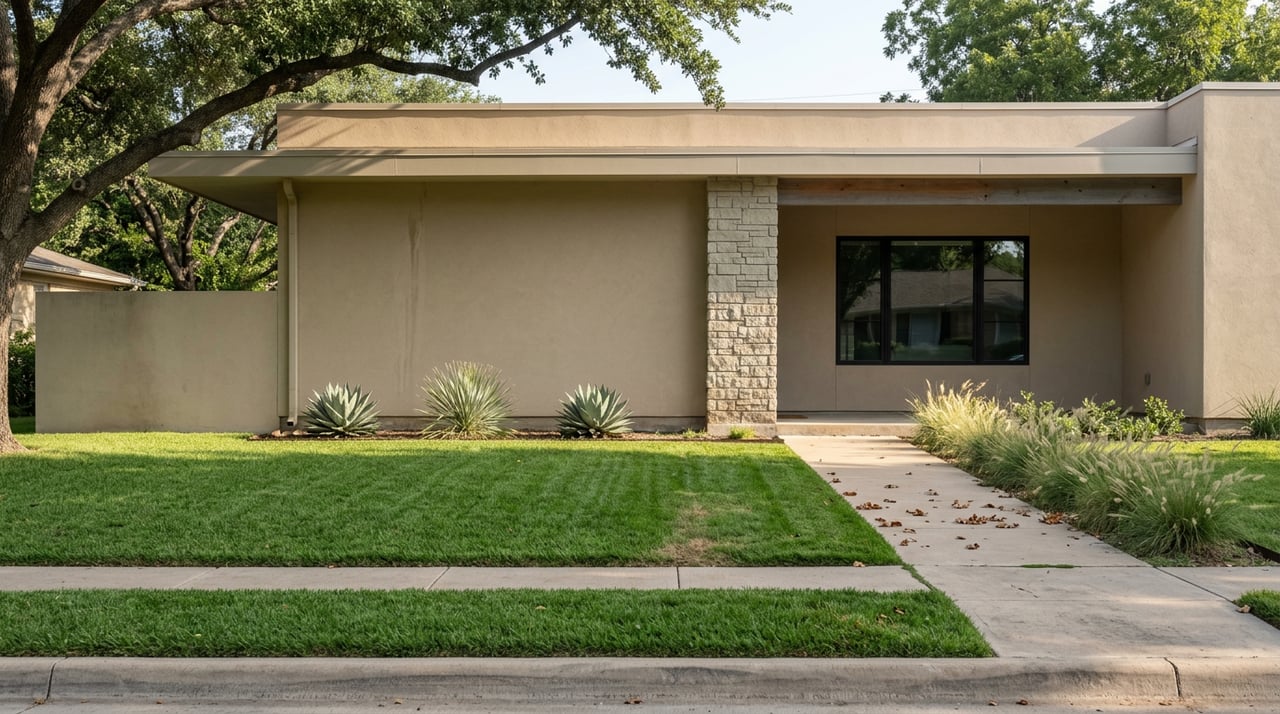
A buyer under contract on a bungalow in Maple-Ash did her final walkthrough on a Tuesday morning and found a neighbor standing at the curb with a shovel, waiting for water. He explained, almost apologetically, that the whole block gets flooded on a rotating schedule, that Thursdays are their turn, and that if she didn't know how to open the gate valve by the following week, her new lawn would go from lush to crunchy fast. Nobody had mentioned this at the offer stage. Nothing on the seller disclosure form used the word "schedule." The buyer had assumed, reasonably, that anything called flood-related would show up next to the flood zone question. It didn't, because it isn't the same question.
That confusion is the whole story here. In Tempe's oldest neighborhoods, "flood" is doing two unrelated jobs, and almost nothing in a standard transaction forces anyone to separate them for you.
The first flood is the one everyone already understands: a FEMA-mapped Special Flood Hazard Area, sometimes called the 100-year floodplain, which is the zone with a 1 percent annual chance of flooding. Tempe participates in the National Flood Insurance Program, and if a property sits inside a mapped SFHA and carries a federally backed loan, flood insurance is not optional. That's a hazard designation, and it lives with the parcel on a FEMA map regardless of who owns the house.
The second flood has nothing to do with risk at all. It's a delivery system. The City of Tempe still operates urban flood irrigation for roughly 850 residential customers, running more than 37 miles of irrigation mains and coordinating water delivery with Salt River Project on a rotating schedule, the same basic setup that's kept the mature tree canopy and green lawns in the city's oldest pockets alive for decades. It's a utility, not a warning label. A property can be flood-irrigated and sit nowhere near a mapped floodplain. It can also, in rarer cases, be both. The two labels are independent, and a listing sheet that mentions one tells you nothing about the other.
Buyers who assume the words are interchangeable make one of two mistakes. They either panic about insurance they don't need, or they skip due diligence on an actual obligation, the irrigation account and delivery schedule, because they think the flood zone box already covered it.
Arizona is a buyer-beware state. The protection most people assume exists, the Affidavit of Disclosure required under A.R.S. § 33-422, only applies to raw or lightly improved land sold in unincorporated county areas outside a recorded subdivision. A bungalow inside Tempe city limits doesn't qualify. What you're actually working from is the customary Seller's Property Disclosure Statement, and that form asks sellers what they personally know, not what's independently verified. A seller who's lived somewhere for thirty years and just calls it "watering day" may not think to describe an irrigation delivery schedule as a disclosable fact, because to them it isn't a problem. It's Tuesday.
That gap is exactly where the friction shows up during a transaction. Nobody is lying on the SPDS. The form was simply never built to ask the right question, and Tempe's flood irrigation program isn't listed as a hazard anywhere a first-time buyer would think to look for it.
The clearest evidence of how much this matters shows up in the numbers, not the paperwork. In Tempe's Maple-Ash district, one of the city's oldest surviving neighborhoods and among its most flood-irrigated, buyers have been paying well into the $400,000s for aging original homes with no intention of living in them as-is. They're buying the lot, the lush flood-irrigated canopy, the proximity to ASU and Mill Avenue, and the zoning that allows a rebuild, then tearing the house down and starting over.
That's a meaningful shift in what due diligence should even be checking. If the market has already decided the structure is close to irrelevant to price, a buyer's inspection dollars are better spent confirming what actually transfers with the land: is the irrigation account active, is it transferable, what does the delivery schedule look like, and is there any lapsed obligation that would need to be reinstated with the city. A roof inspection on a house that's going to be demolished in eight months isn't due diligence. It's a wasted afternoon.
Not every flood-irrigated pocket of Tempe is playing out the same way yet. Hudson Manor, another historic, flood-irrigated district close to the light rail and ASU, still trades largely on livable original and remodeled homes rather than teardown value, and it carries no HOA, which changes the calculus on what you're allowed to do with the lot once you own it. The infrastructure underneath both neighborhoods is the same city program. The market treating that infrastructure as a land bank rather than a landscaping feature is, so far, a Maple-Ash-specific story.
| Neighborhood | Flood-irrigated | HOA | What's driving current pricing |
|---|---|---|---|
| Maple-Ash | Yes | No | Land and lot value, active teardown/rebuild activity near ASU and Mill Avenue |
| Hudson Manor | Yes | No | Livable original and remodeled homes, light rail and ASU proximity |
If you're on either side of a contract on a flood-irrigated lot in one of these neighborhoods, the standard inspection checklist misses the parts that actually matter here. Before you get too far into escrow:
None of this is exotic. It's the kind of homework that simply doesn't come up in neighborhoods without a century-old irrigation system running underneath them, which is exactly why it gets missed by buyers moving from newer parts of the Valley.
Does flood irrigation mean my home is in a flood zone? No. They're unrelated systems that happen to share a word. Flood zone status comes from FEMA mapping and determines insurance requirements. Flood irrigation is a city-run water delivery utility for landscaping. Check both separately.
Do I automatically keep the flood irrigation service when I buy the house? Not automatically. The account is tied to the property but generally needs to be set up or transferred by the new owner with the city, and the delivery schedule and annual rate are set independently each year.
Is this only a Maple-Ash issue? No. Hudson Manor sits on the same underlying city flood irrigation infrastructure. Maple-Ash is simply the neighborhood where the land-value-over-structure pricing pattern has shown up most clearly so far.
If you're weighing an offer on a flood-irrigated lot near Mill Avenue, or trying to figure out whether your Hudson Manor home should be priced as a livable house or a rebuild opportunity, that's exactly the kind of local detail that changes a negotiation. Kristi Newman can walk the property with you, pull the actual irrigation and floodplain records before you're locked into a deadline, and help you figure out which number, the house or the land, you're really buying. Reach out for a free consultation before you write your next offer in Tempe's historic core.
Stay up to date on the latest real estate trends.



Get assistance in determining current property value, crafting a competitive offer, writing and negotiating a contract, and much more. Contact Kristi today to discuss all your real estate needs!